

PUprint revolution in 3d printing
thermoset PU for Additive Manufacturing.


NEXT GENERATION POLYURETHANE
- Print unique shapes without the constraints imposed by the moulding process
- As tough as vacuum casting PUs
- From soft to semi rigid with four different hardness levels available
- High mechanical and thermal resistance
space
space
- The SYNTHЭD+ PUprint line-up has the same very high mechanical and thermal properties as SYNTHENE’s elastomer range
- PUprint provides a sturdy alternative to the existing TPU filament materials
space
- Clients have already ordered the first 3D printers to print this cutting edge material with high demand from sectors like defence, aviation, automotive and other industries with high demands on quality
space
- PUprint is the first system to be launched in the SYNTHЭD+ range which will be dedicated to additive manufacturing
- SYNTHENE’s mindset is to bring high performance to the 3D printing industry for fully functional parts that are as resistant as conventionally produced parts
Documents
Management Summary RUBBER PUprint
Quick handout summarising the technical characteristics of SYNTHЭD+ PUprint, SYNTHENE’s first two-component polyurethane that can be 3D-printed.
fully functional 3D-printed parts
PRINT ANY SHAPE
Any imaginable shaped object is 3D-printable with PUprint thanks to a specific formulation to produce high- precision parts.
PRINT LIGHTER PIECES
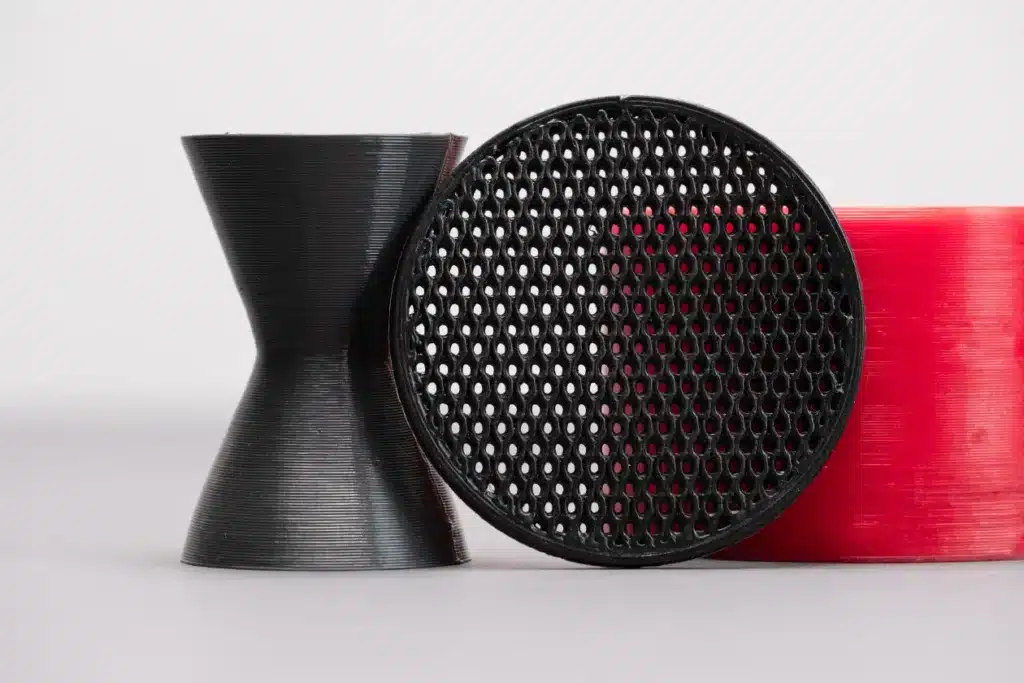
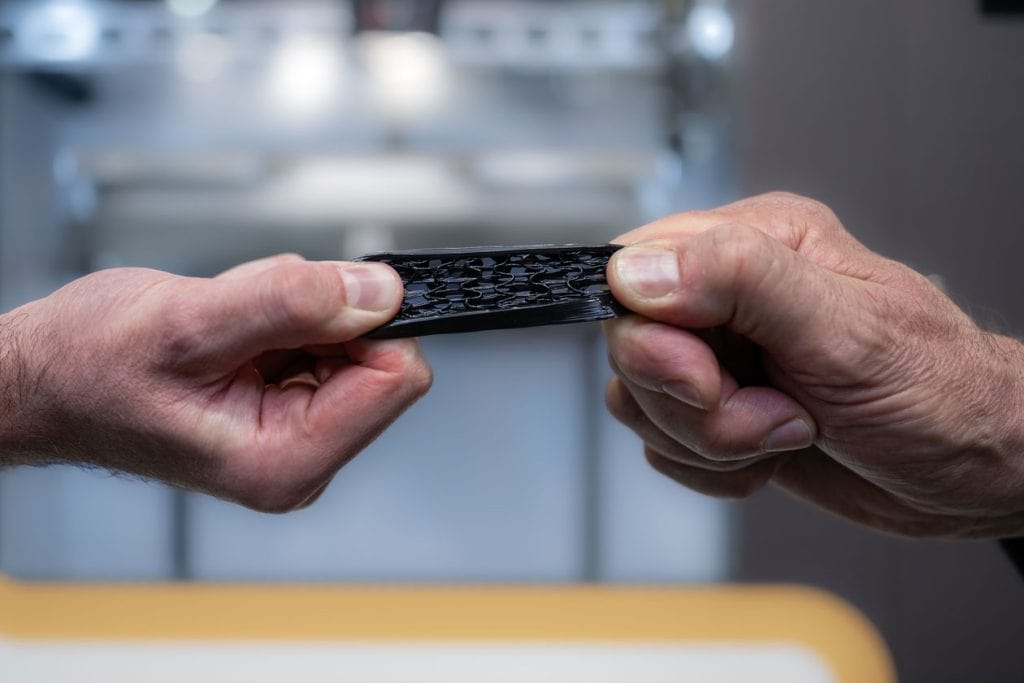
By reducing the amount of filling the parts can become lighter and more flexible.
AS TOUGH AS VACUUM CASTING PU
The mechanical properties of SYNTHЭD+ PUprint are as good as of conventional PUs for vacuum casting.
HIGH THERMAL RESISTANCE
SYNTHЭD+ PUprint stands out with its high thermal resistance comparable to conventional industrial parts.
Technical Data
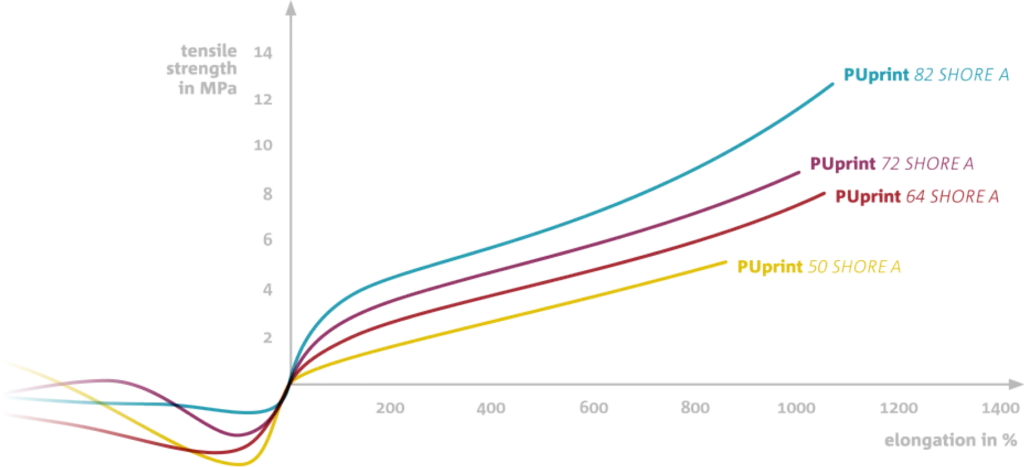
| SYNTHENE PRODUCT NAME | PUprint 80 A | PUprint 70 A | PUprint 65 A | PUprint 50 A | SYNTHENE PRODUCT NAME | ||
|---|---|---|---|---|---|---|---|
| Hardness | 82 | 72 | 64 | 50 | Hardness | Shore A | ISO 868 : 2003 |
| Elongation at break at 23°C | 1105 | 940 | 1114 | 851 | Elongation at break at 23°C | % | ISO 37 : 2012 |
| Tensile strength at break at 23 °C | 13 | 9,2 | 8,5 | 5,3 | Tensile strength at break at 23 °C | MPa | ISO 37 : 2012 |
| Tear resistance at 23°C | 53,5 | 45 | 32,7 | 21,2 | Tear resistance at 23°C | KN/ m | ISO 34 : 2015 |
FAQ
Why is is different from other Additive Manufacturing technologies?
As a specialist in thermoset Polyurethane resin formulation, Synthene’s strength is to benefit from its extensive expertise in the fabrication of rapid prototyping resins and injection-moulding PU rubber.
This opens the door to adapting injection and molding elastomers into 3d-printable PU products.
We obtain mechanically strong and functional parts, with a high structural integrity. The PU part is as strong as a molded part, that can be used not only as a prototype but also as a final part with high durability.
What type of polymers are these materials?
The PUPrint materials are thermoset polyurethane elastomers.
Unlike TPU (Thermoplastic Polyurethane), thermoset materials benefit from a very stable chemical structure, providing high performance and durability.
The chemical nature of thermoplastics and thermoset plastics is different. When exposed to high temperatures, TPU are subject to melting. A thermoset polymer will often show a higher temperature resistance. When exposed to very high heat, the material will be degraded, but is not likely to melt.
Is it like SLA or DLP?
This range of thermoset PU for printing is completely different from Stereolithography or Digital Light Processing.
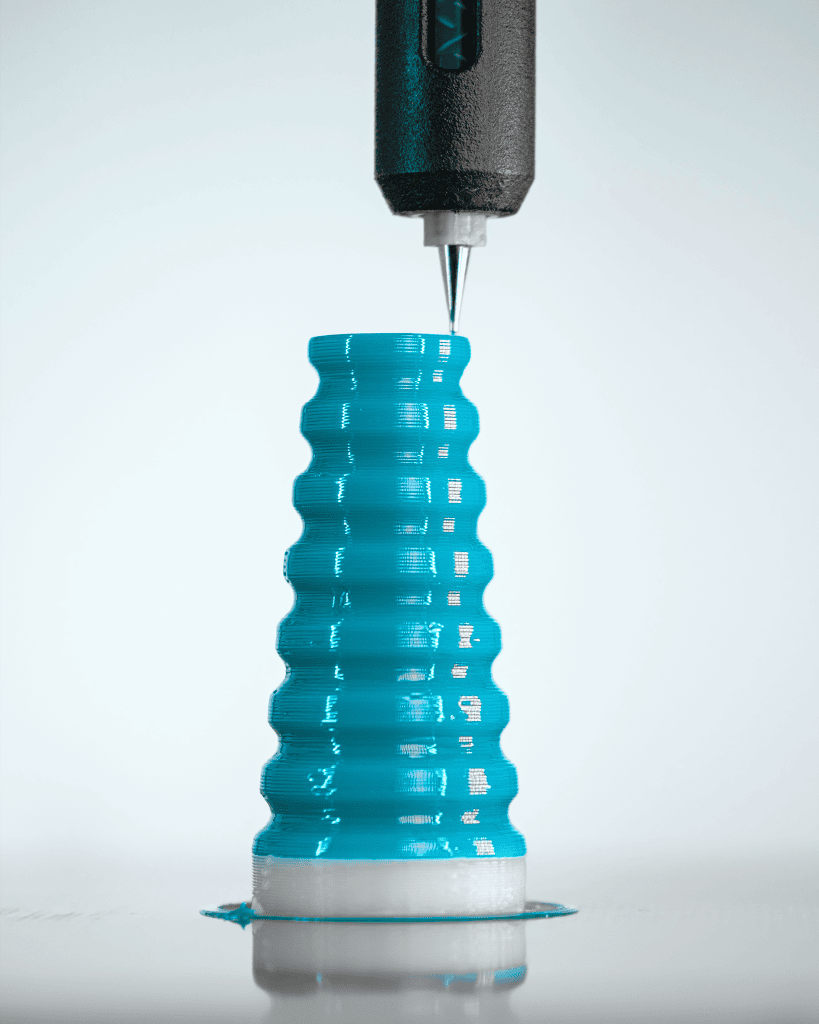
With the technology of Material Extrusion (MEX), a two-component liquid polyurethane is printed on the support with a 3D-printer.
The deposition of material, layer after layer, involves a chemical reaction between each stratum, creating a strong bonding and adhesion. The 3d-printed part is therefore perfectly isotropic. Its durability is remarkable compared to photopolymerizable systems like SLA or DLP.
Why 3d-print polyurethane VS injection process?
Additive Manufacturing opens the field of possibilities in terms of project realization.
First, it allows one to create an infinite combination of shapes, without the restrictions imposed by injection-moulding.
It is also a way to get rid of the tooling material. An aluminium mold often represents a high cost in a project budget, and often involves a certain rigidity in terms of design and flexibility. A silicone mold allows more possibility to change, but has a limited lifetime. 3D-printing polyurethane is therefore a more cost-efficient solution, that allows more creativity in the testing process and in the production phase.
The advantages that Additive Manufacturing brings to the equation are endless. The production process is more environmental-friendly with no tooling material, no release agent and almost no waste: each drop of PU material is carefully used during the printing process. In terms of product economy, it is also possible print lighter parts, by designing an STL file with less material inside the core of the part.
The use of a 3d-printer can indeed allow specific shapes that are technically not possible with the process of injection moulding, thus increasing the possibilities tenfold, without compromising the mechanical performance.
In what kind of printer can I use the material?
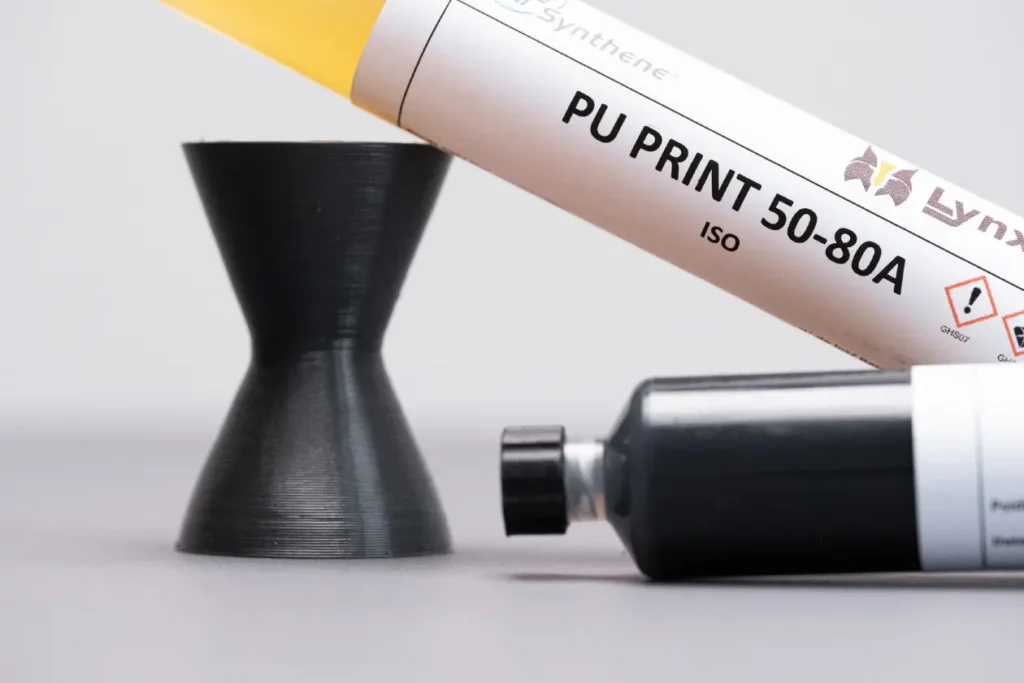
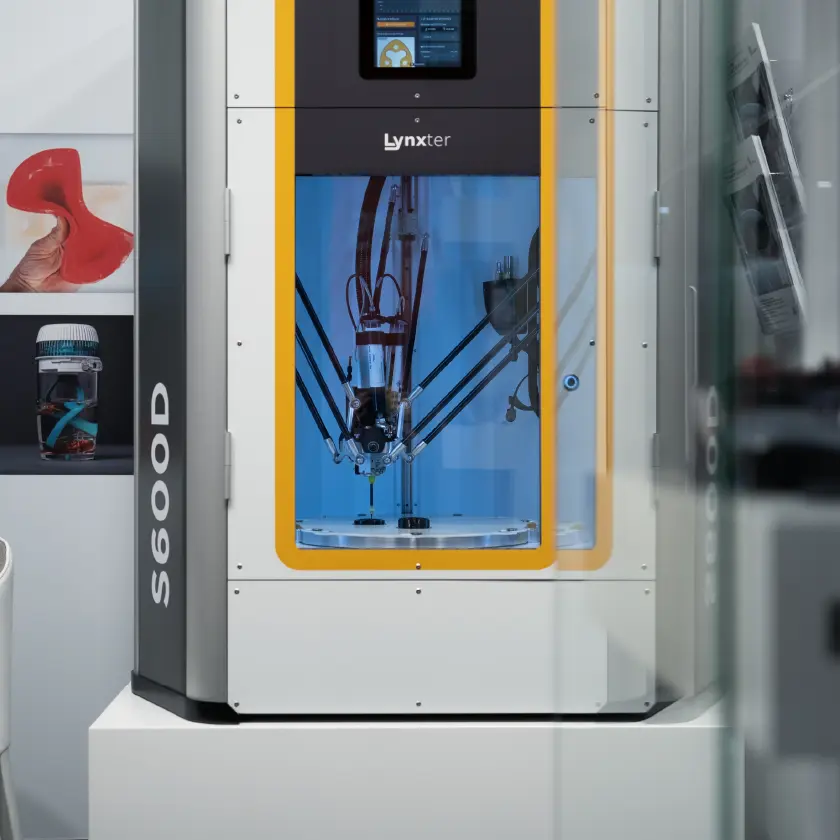
This unique technology is the fruit of a close partnership between Synthene and Lynxter, a French company that manufactures 3D printers capable of printing polyurethane and silicone. Our PUprint resin is specifically formulated for their machines. The printing process perfectly adapts to the deposition of two-component liquid materials, with the possibility to add a support material.
Why is the product so unique?
The nature of a thermoset polyurethane provides a comprehensive set of assets for the realization of strong and functional 3d-printed parts.
The chemical reaction between each layer ensures better mechanical resistance

